Doors
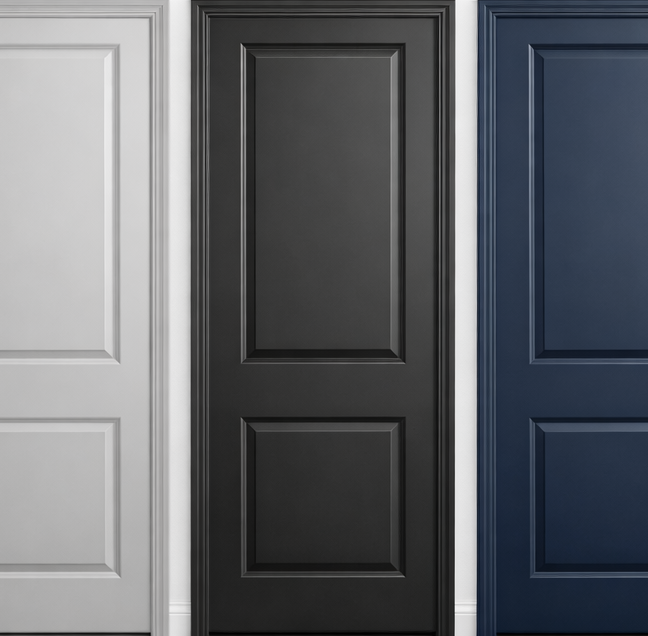
For The Canadian homes, commercial and industrial building, we focus on practical doors that handle daily use, seasonal temperature swings, and moisture exposure. Typical selections include steel insulated entry doors, fiberglass entry doors, and molded interior doors in standard panel styles.
The most important difference for homeowners is the door core density. Density affects weight, durability, sound control, and long-term resistance to dents or warping.
Door Density Options (Home Use in Canada)
- Low density (hollow-core interior): light weight, budget friendly, easy to install, best for bedrooms and low-traffic rooms.
- Medium density (solid particleboard core): better feel and strength, improved noise reduction, ideal for most interior living areas.
- High density (solid engineered/MDF/mineral core): strongest and heaviest, best sound control and durability for high-traffic or multi-family units.
- Insulated entry door slabs (steel or fiberglass with foam core): built for exterior climate performance with better thermal resistance for Canadian winters.
Key Features by Density
- Light core: lower cost, easier handling, lower sound attenuation.
- Medium core: balanced cost/performance, less flexing, better hinge stability.
- High core: strongest impact resistance, premium acoustic performance, longest service life.
- Insulated exterior core: better energy efficiency, lower draft risk, stronger comfort performance near entries and garages.
Recommended Residential Specs
- Exterior: insulated steel or fiberglass door with weatherstripping and threshold sweep.
- Main interior doors: medium-density solid-core for bedrooms, offices, and bathrooms.
- Utility and busy areas: high-density solid-core where impact and noise are higher.
- Typical styles: simple 2-panel and 6-panel doors in white, black, or wood-look finishes.